
Dolne Miasto in Gdansk — What to See Away from the Old Town Crowds
The bastions, Śluza Kamienna and the Opływ Motławy canal — minutes from Długi Targ, barely in guidebooks. What to see and where to start the walk.
Search for “what to see in Gdansk” and you’ll always get the same list: Długi Targ, the Żuraw crane, St. Mary’s Basilica, and a queue for tickets to the tower. A dozen or so minutes’ walk from that crowd, on the other side of Stare Przedmieście, lies a district almost nobody writes about — even though it has its own fortifications dating back four centuries, a canal to stroll along, and a quiet you won’t find on Długa Street even at dawn. This is Dolne Miasto, and below is exactly what you’ll see there, where to start your walk, and how much time to set aside.
Where Dolne Miasto is, and why tourists skip it
Dolne Miasto occupies the south-eastern part of central Gdansk — bordered to the west by the Nowa Motława, to the south and east by a belt of former bastion fortifications, and to the north, along Szkocka Grobla, connecting to Długie Ogrody. It’s a sizeable area, around 55 hectares, mostly residential and still in the process of regeneration.
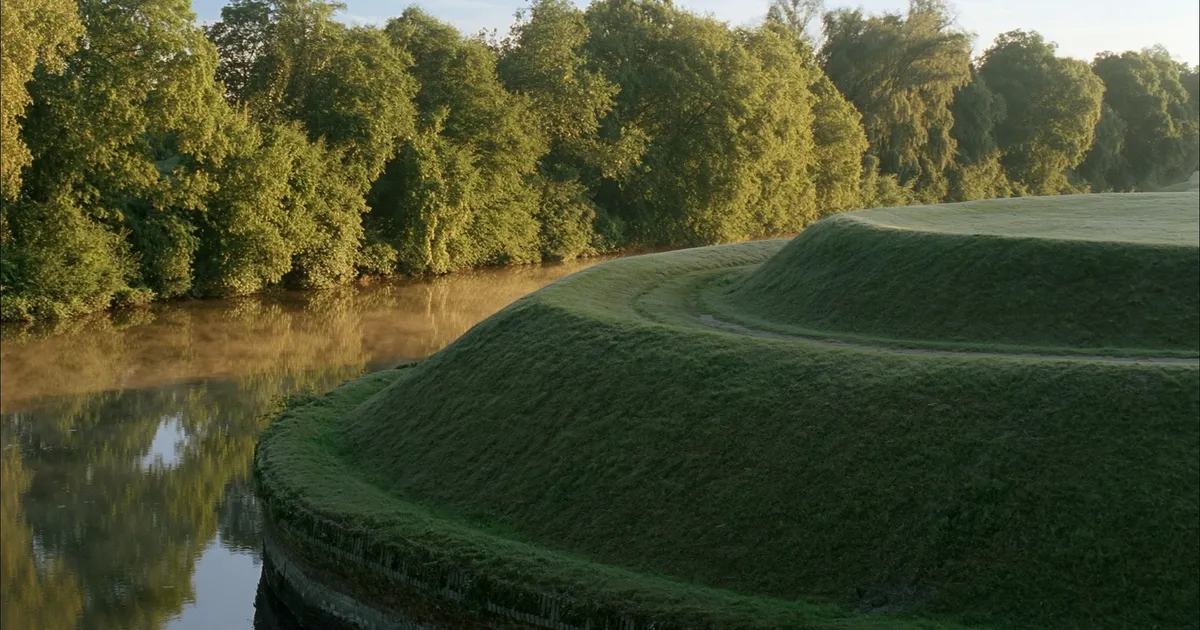
The reason tourists don’t end up here is simple: the district doesn’t have one single, recognisable landmark you could put on a guidebook cover — nothing to match the Żuraw crane or St. Mary’s Basilica. Instead, it has something you can’t buy on Długi Targ: grass-covered earthen ramparts, a canal without a crowd photobombing your shot, and a fortification history you have to piece together yourself from street signs and the shape of the land, rather than get handed ready-made on an audio guide.
It’s also a different architectural register. Główne Miasto was rebuilt from scratch after the war according to pre-war plans, so what you photograph on Długa Street today is, to a large extent, reconstruction. Dolne Miasto never went through rebuilding on the same scale — what stands here is a mix of authentic, sometimes weathered buildings and empty, overgrown plots that have waited decades for a new developer. It’s a district in the middle of change, not a ready-made postcard — and for some visitors, that’s exactly the appeal.
Getting there — Plac Wałowy, Brama Nizinna, and the start of the route
The most convenient starting point is Plac Wałowy in Stare Przedmieście, with the historic Brama Nizinna (Lowland Gate, at Plac Wałowy 3) — a fortification nearly four hundred years old, next to a bus stop of the same name (lines 123 and 183, running, among other directions, toward Dworzec Główny and Plac Solidarności — check the current timetable at ztm.gda.pl). From Długi Targ it’s a dozen or so minutes’ walk through Stare Przedmieście; if you’d rather save your legs, you can also take the bus straight to the gate. Right by the gate you’ll pass Mała Zbrojownia (the Small Armoury, 1643–1645) — if you can see it, you’re in the right place.
Entry to the grounds is free — this isn’t a paid attraction with a ticket booth and opening hours, just a public city space, so there’s nothing to book and no need to plan around a set time.
The bastions and Śluza Kamienna — fortifications four centuries old
The oldest element of the entire system, the św. Gertrudy bastion, was begun in 1607, still in the Italian style. The subsequent bastions — Żubr, Wilk, Wyskok, Miś, Królik, and Ogrodowy — were built to a design by the Dutchman Cornelius van den Bosch, mainly during the 1620s and 1630s, with work wrapping up around 1638 (historical sources give slightly different dates for individual structures within that same range, so treat them as approximate).
Two bastions — św. Gertrudy and Żubr — are the most “finished” today: they have deck chairs, a bangkirai-wood terrace, replicas of 18th-century cannons, and an educational trail explaining how the whole defensive system worked. The rest — Wilk, Wyskok, Miś, Królik, Ogrodowy — are still raw, grass-covered earthworks with no tourist infrastructure, which for some visitors is precisely the appeal. The names of today’s streets in this area — Reduta Wilk, right next to the sluice, for one — directly echo the old fortification names, so even a street sign here doubles as a small history lesson.
Between the Wilk and Żubr bastions, right by the path, stands Śluza Kamienna (the Stone Sluice) — built in 1622–1623 (the masonry weir was added in the mid-17th century), a hydraulic structure unique on a European scale, which let Motława water flow into the city moats and allowed the approaches to Gdansk to be flooded in the event of a siege. In 1656, during the Swedish siege of the city, this “water manoeuvre” genuinely played a part in the army’s withdrawal from the walls. You can view the sluice from the outside — from the Żubr bastion or from the path, since there’s no access inside — and its structural condition has worried conservators for years; if you want the current restoration status, check the latest information at gdansk.pl before your visit.
Opływ Motławy — a walking and cycling loop
Opływ Motławy is a former city moat, converted into a recreational canal in the 1920s — five eastern bastions were demolished at the time, and the name “Opływ” itself was officially adopted in 1911. Today it’s over 5 kilometres of combined walking and cycling paths around the water, with a small kayak landing by the Wilk bastion — a green-space layout that won an award from the Society of Polish Town Planners (Towarzystwo Urbanistów Polskich) in 2007.
The area is in the middle of a multi-year regeneration: a stretch of the flood embankment together with the path between Elbląska and Zawodzie streets was rebuilt and reopened in 2024, and the whole area is eventually meant to become a 42-hectare park — the third-largest in Gdansk. Public consultations and further phases of work are still ongoing, so you may run into construction on individual stretches — but the loop as a whole remains passable throughout. It’s also a good cycling route if you happen to have a bike with you — we’ve rounded up more options across the whole Tri-City in → Cycling Routes in Gdansk.
Buildings that survived the war, and traces of old factories
Unlike Główne Miasto, rebuilt after the war almost from nothing, the southern part of Dolne Miasto retained a good deal of pre-1939 Art Nouveau street-front buildings — townhouses that genuinely survived, rather than being reconstructed. The north-western part of the district suffered the worst damage, destroyed in 1945; the military barracks on the other side survived largely intact.
Dolne Miasto was also once a “City of Factories” — from the mid-19th century, it was home to mills, oil presses, and starch works, and from 1816 and 1839 respectively, artillery workshops and an arms factory, part of whose buildings have housed a chain supermarket since 2011. This industrial pedigree explains why the district looks so different from the showcase Główne Miasto — this was Gdansk’s working hinterland, not its façade for visitors.
The most visible trace of that era stands on Łąkowa Street: the former Fabryka Tytoniu (Tobacco Factory) building from 1927, now being converted into the multi-building Fashion Lab office campus — the new headquarters of LPP, the Gdansk-based clothing group behind brands including Reserved and Cropp. It’s a rare example, for this district, of large-scale adaptive reuse, still underway — further buildings in the complex are due to be completed by 2027, and the factory’s industrial shell was deliberately kept in the new design rather than demolished.
How much time to set aside — route options
How much time you need depends on whether you just want to see the fortifications, or do the full loop with a camera or a bike.
| Route | Distance / time | What it covers |
|---|---|---|
| Short walk | approx. 1–1.5 km, 45–60 minutes | Brama Nizinna, the św. Gertrudy and Żubr bastions, Śluza Kamienna |
| Full Opływ loop on foot | over 5 km, 1.5–2 hours | All the bastions along the route, the canal, green spaces |
| Full loop by bike | over 5 km, 30–45 minutes | Same as on foot, plus continuing on toward Długie Ogrody |
The best light for photos is early morning or just before sunset — that’s when the brick walls and grassy slopes catch the best contrast, and there’s almost nobody on the route.
Who this walk is for
This route is for people who’d rather photograph textures — brick wall, grass on a slope, reflections in the canal — than pose in front of a monument. For fortification history buffs who prefer walking on real ramparts to reading about them behind museum glass. And for anyone who, after two days on Długi Targ and the → Royal Route, wants to see Gdansk without a single tour group. If it happens to be raining and you’re after an indoor plan, save this walk for another day — we’ve put together specific ideas for a → rainy day in Gdansk separately.
The neighbouring → Wyspa Spichrzów (Granary Island) makes a good addition — the Stągiewny footbridge and Długie Ogrody connect it to the northern edge of Dolne Miasto, so you can combine both districts into one longer walk without doubling back to your starting point.
It’s also worth remembering this isn’t a route with a lift, a café every 200 metres, and a crowd that forces a slow pace — if you’re travelling with a small child in a stroller, or looking for a proper standalone attraction (a tower, an exhibition, a ticket in hand), the classic Royal Route is the better fit. Here, the main draw is the space itself, not a single attraction at the end of the route.
Where to stay to have this close by
Of all the Mint locations, Bastion Wałowa puts you closest — 7 minutes on foot from Długi Targ and 350 metres from Dworzec Główny, exactly enough to walk over to Plac Wałowy in the morning before it heats up, and just as easily head back toward the Old Town for dinner in the evening. It’s also the most convenient base for the rest of the Royal Route, if you’re planning both walks on the same day.
Check availability at the → Bastion Wałowa apartments, or message our concierge (rezerwacje@mintapartments.pl, WhatsApp +48 797 412 679) — we’ll help you combine this walk with the rest of your Gdansk plan without unnecessary criss-crossing across the city.
Frequently asked questions
- What is Dolne Miasto in Gdansk?
- Dolne Miasto (the Lower Town) is a historic district in the south-eastern part of central Gdansk, built around 17th-century bastion fortifications. Unlike Główne Miasto (the Main Town, or Old Town), you won't find rebuilt townhouses or grand landmarks here — instead, the earthen bastions, a historic sluice, and the Opływ Motławy canal have survived, now serving as a recreational green space for the city.
- How do you get to Dolne Miasto from central Gdansk?
- The simplest way is on foot from Długi Targ (the Long Market) through Stare Przedmieście — a dozen or so minutes' walk to Plac Wałowy and Brama Nizinna, where the bastion grounds begin. Alternatively, take bus line 123 or 183 straight to the Brama Nizinna stop, including from the direction of Dworzec Główny (the main train station) — check the current timetable at ztm.gda.pl.
- Is there an admission fee for the Dolne Miasto bastions and Opływ Motławy?
- No — it's an open public space, with no tickets, ticket booths, or set visiting hours. The one exception is Śluza Kamienna (the Stone Sluice), which you can only view from the outside, since there's no official public access inside.
- How long does a walk around Dolne Miasto take?
- The short version — just the stretch from Brama Nizinna through the św. Gertrudy and Żubr bastions to Śluza Kamienna — takes 45–60 minutes. The full loop around the entire Opływ Motławy, over 5 kilometres, takes an hour and a half to two hours on foot, or 30–45 minutes by bike.
Help me book an apartment
The AI concierge matches an apartment to your plans — dates, party size, district. Replies in seconds.
Apartments that fit this stay
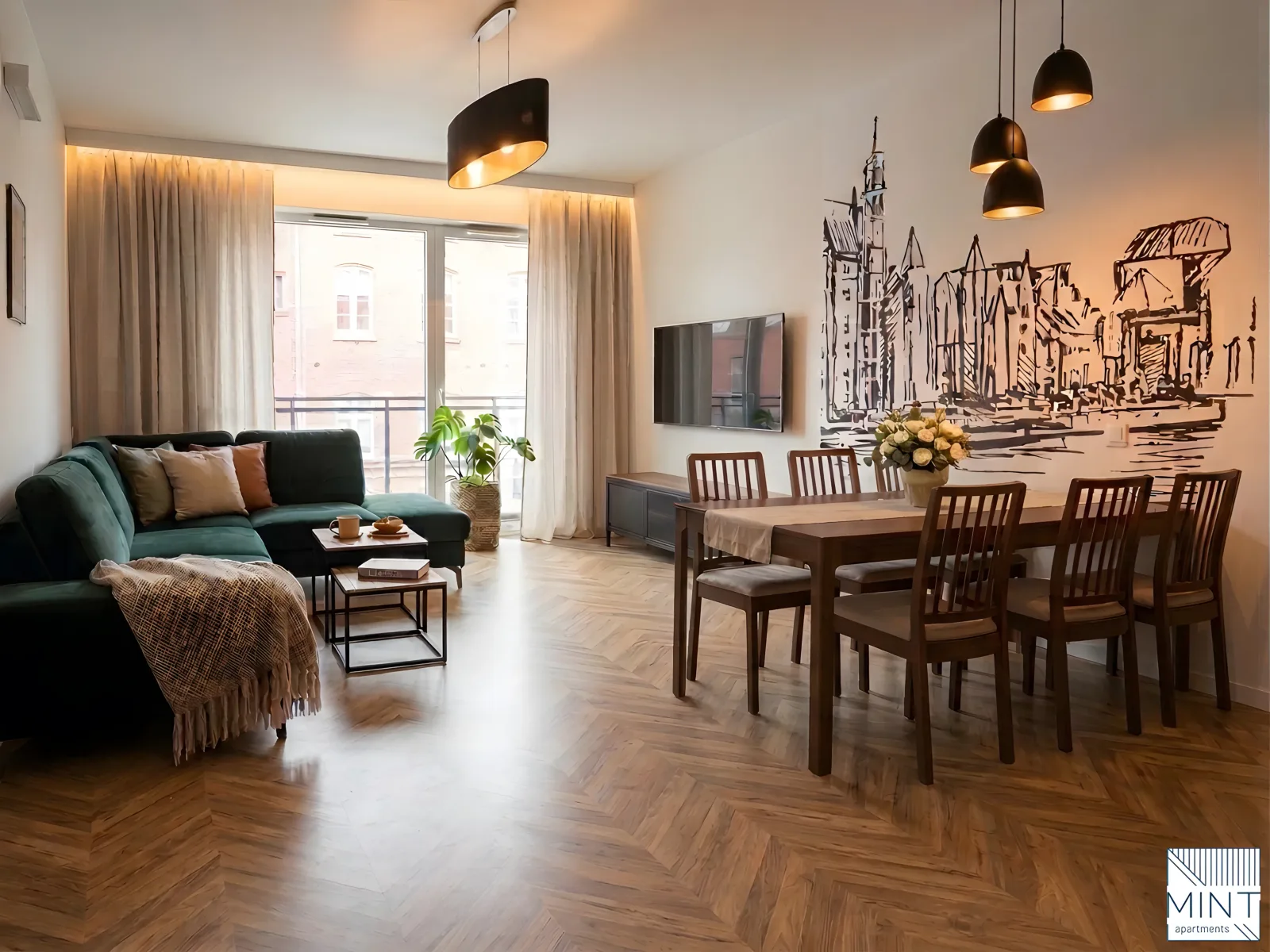
Apartament Bastion Wałowa z dwiema sypialniami
- 2 bedrooms
- 3 beds
- 6 guests
- 65 m²
A spacious two-bedroom apartment with two bathrooms and a balcony right in the heart of Gdańsk on Wałowa Street — 65 m² for up to 6 guests. Balcony overlooking Wałowa Street and the historic Śródmieście quarter. Długi Targ is 400 metres on foot. Fully equipped kitchen with coffee maker, Smart TV, fast Wi-Fi, washing machine and oven. Underground garage included. The largest Mint apartment in the Bastion Wałowa location — the top pick for families and groups of friends.
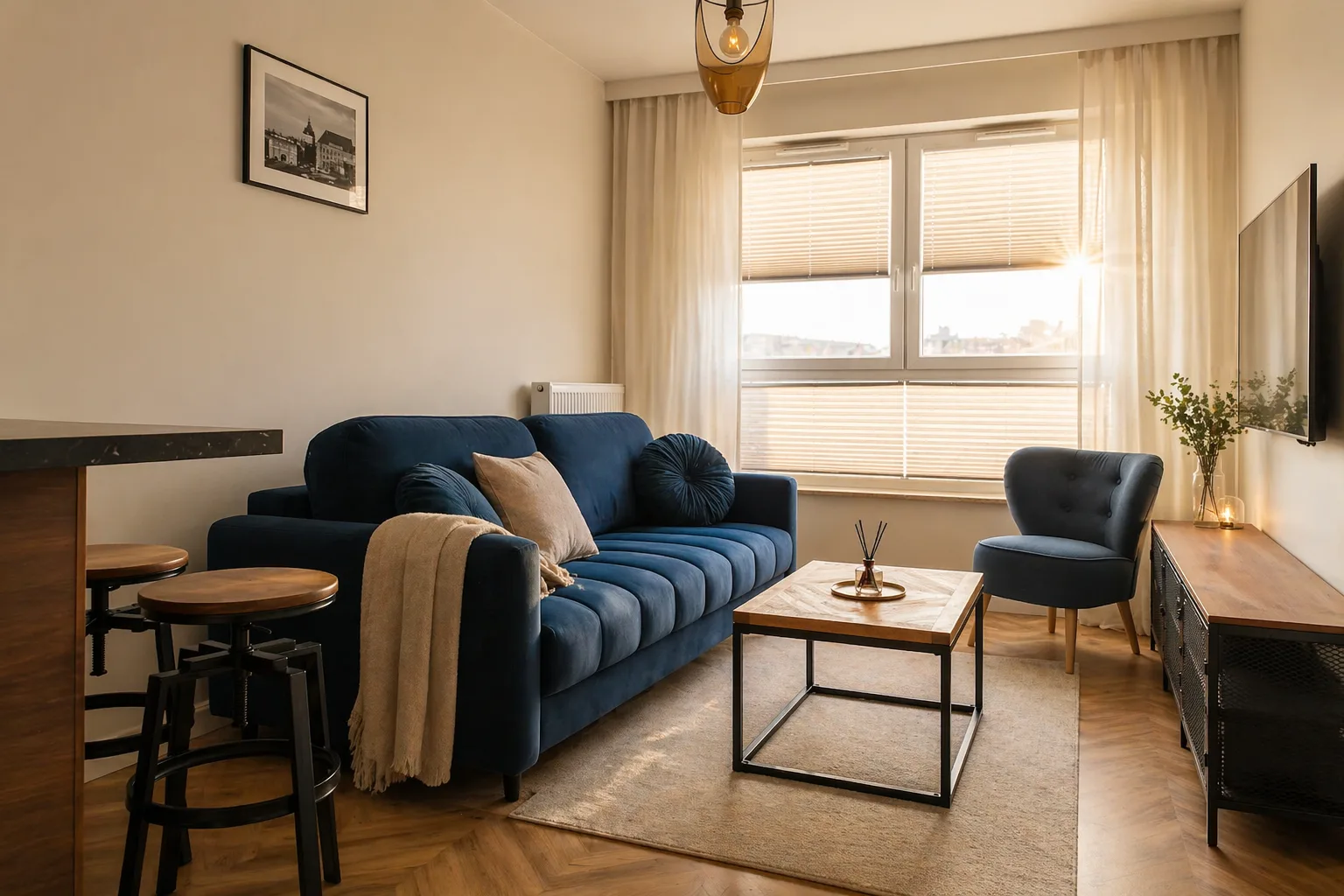
Apartament Suite Bastion Wałowa
- 1 bedroom
- 2 beds
- 4 guests
- 37 m²
A suite apartment right in the heart of Gdańsk on Wałowa Street — 37 m², bedroom with a king-size bed, fully equipped kitchen with coffee maker, fast Wi-Fi and Smart TV. 5 minutes' walk to the Old Town, 7 minutes to Długi Targ. Modern finish in the new wing of the Bastion Wałowa complex, lift and underground garage. Ideal for a couple or small family wanting quiet comfort in the historic centre of Gdańsk.
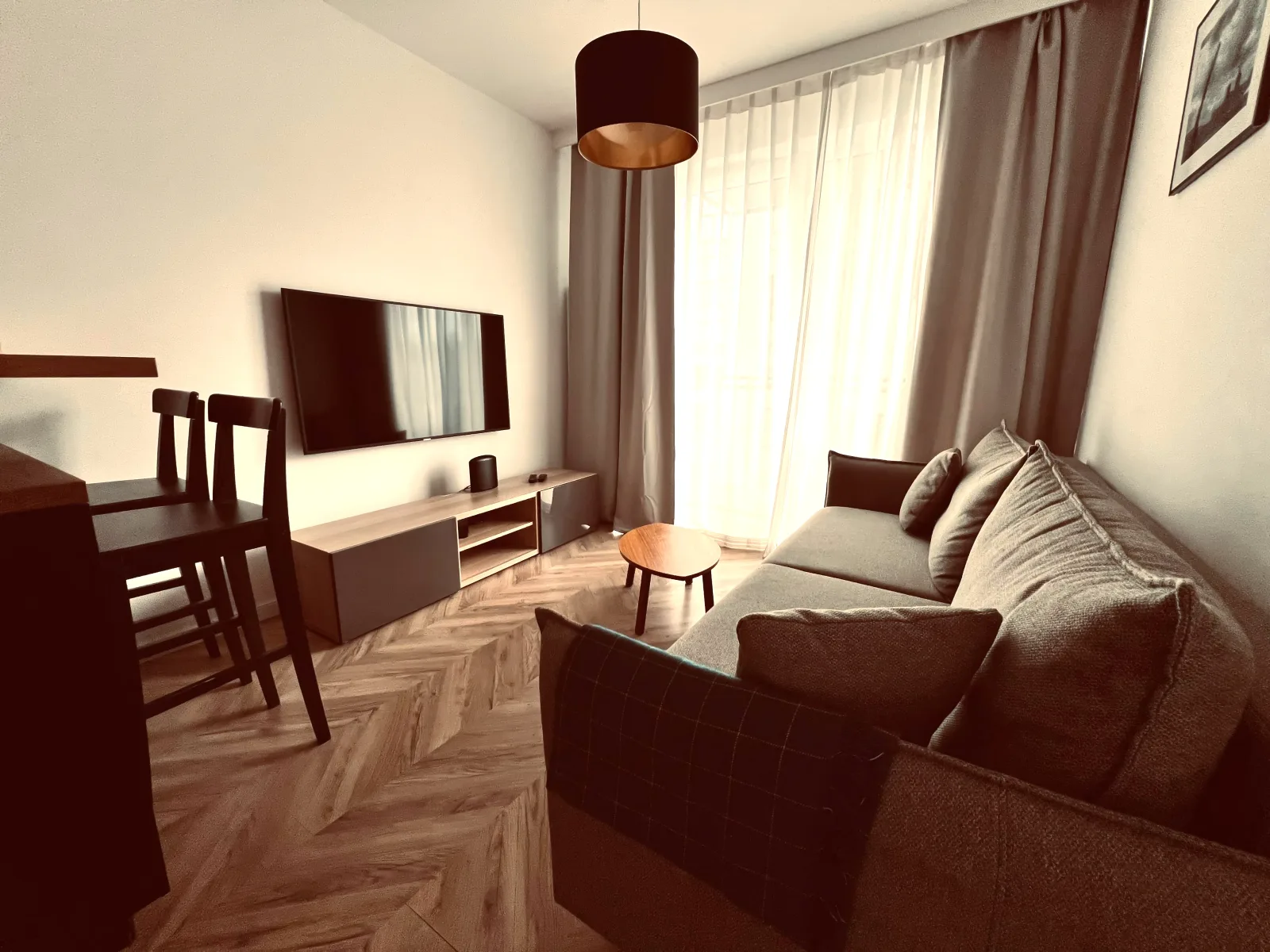
Apartament standard Bastion Wałowa
- 1 bedroom
- 2 beds
- 4 guests
- 36 m²
An apartment on Wałowa Street in the heart of Gdańsk — bedroom with a comfortable bed, fully equipped kitchen, shower bathroom. Underground garage, lift, fast Wi-Fi. No unnecessary extras — with an address that speaks for itself. Długi Targ 7 minutes on foot, Main Railway Station 350 metres, tram to Letnica and the beach 15 minutes. The best price-to-location ratio in the entire Bastion Wałowa complex.
Liked these topics?
Monthly guide to Gdańsk — events, new places, our apartments and their availability. No spam, just one email.
Related posts
Gdansk for People with Disabilities — A Barrier-Free Guide
Transport, the Old Town, beaches, and museums with lifts — a tested guide to accessibility in Gdansk for people with disabilities and reduced mobility.

Money in Gdansk: Currency Exchange, Cards, BLIK, and Tipping Without the Mistakes
What you pay with in Gdansk, where to exchange money safely, how BLIK works and how much to tip — a practical guide to paying your way around the city.
The Free City of Danzig, 1920–1939 — What Traces You Can Still See Today
The Free City of Danzig disappeared from the map in 1939, but its traces still stand in the city. Here's exactly what you'll see, and how to turn it into a route.