
Gdansk for People with Disabilities — A Barrier-Free Guide
Transport, the Old Town, beaches, and museums with lifts — a tested guide to accessibility in Gdansk for people with disabilities and reduced mobility.
Gdansk tends to bring to mind a historic Old Town full of cobblestones and narrow lanes — and part of the city genuinely looks like that. But that’s only part of the picture: the city has a fully low-floor tram and bus fleet, officially marked beach access points, and museums with lifts that meet real accessibility standards. This guide brings together what actually matters for people with disabilities and people with reduced mobility — including a parent with a stroller, someone recovering from a leg injury, or a senior with a heavy suitcase: transport, a route through the Old Town, beaches with ramp access, venues with lifts, and an honest account of what we can’t promise about a specific apartment without checking it first.
What to expect — Gdansk is better prepared than its age suggests
Gdansk has over a thousand years of history, and Główne Miasto was rebuilt after the war with attention to every architectural detail — including the cobblestones, which can be an obstacle today. That doesn’t mean the city has stood still, though. The entire tram fleet has been low-floor since 2021, and buses have been since 2009 — a rarity nationwide. The city also runs an official portal, “Gdańsk bez barier” (“Gdansk Without Barriers”), and since 2022 the Gdańsk Tourist Organisation has been auditing the accessibility of tourist venues together with people with a range of different disabilities.
The problem isn’t that this information doesn’t exist — it’s simply scattered: some with the city, some with individual venues, some with the transport operator. This article pulls it together into one practical route: what’s confirmed, what’s worth checking by phone before you arrive, and where to look up current information yourself.
This concerns a wider group of visitors than you might expect: a wheelchair user, a parent with a stroller, someone recovering from a leg injury, someone with heavy luggage, or a senior all rely on exactly the same infrastructure — a low tram entrance, a museum lift, or a step-free beach access point.
Public transport — how to check whether a service is low-floor
This is Gdansk’s strongest point when it comes to accessibility, and hardly anyone knows it. The city retired its last high-floor bus on 31 January 2009, and on 5 March 2021, all 141 trams in the city became low-floor — Gdansk was the first Polish city with continuous tram service to reach a fully low-floor fleet (source: gdansk.pl). In practice, almost every tram and bus service has a lowered floor, designated doors for wheeling a chair in, and a space to secure it safely inside.
“Almost every” doesn’t mean “every single one, without exception” — an individual replacement service can vary, and we can’t confirm the condition of a specific stop or platform from here. If you’re planning a specific route, check the timetable and vehicle type at ztm.gda.pl, or ask the driver when boarding. You’ll find a full overview of the lines, the SKM, and bike rentals in our guide → Transport in Gdansk.
Taxis and ride apps (Bolt, Uber) work smoothly across the city, but a standard car booked through an app isn’t equipped to carry a wheelchair that doesn’t fold down. If you need that kind of transport, arrange it in advance rather than on the spot.
Główne Miasto and the Old Town — routes you can actually get through
The heart of Gdansk is surprisingly flat. The main walking route — from Brama Wyżynna through Złota Brama, along Długa Street and Długi Targ to the Żuraw crane on the Motława — runs on a wide, level surface, with no steps and no steep grades along its entire length. It’s the same route we recommend in → Gdansk for Seniors — Sightseeing at a Relaxed Pace, the difference being that guide is about pacing your visit, while this one is purely about the surface underfoot.
The side streets branching off the main route are a different story — some of them have authentic, uneven cobblestones from centuries past, picturesque in photos but requiring care in a wheelchair or with a stroller. If a reliable surface matters to you, stick to the main, wide streets — you won’t lose any of the city’s atmosphere by doing so.
Długie Pobrzeże, the Motława waterfront right by the Żuraw crane, has a similarly wide and level surface, with benches spaced along its whole length — a good spot for a longer break halfway through. At the odd narrow passage between townhouses, you might come across a kerb with no ramp — if you’re planning a longer route off the main track, it’s worth asking locally or messaging our concierge, who knows the area day to day.
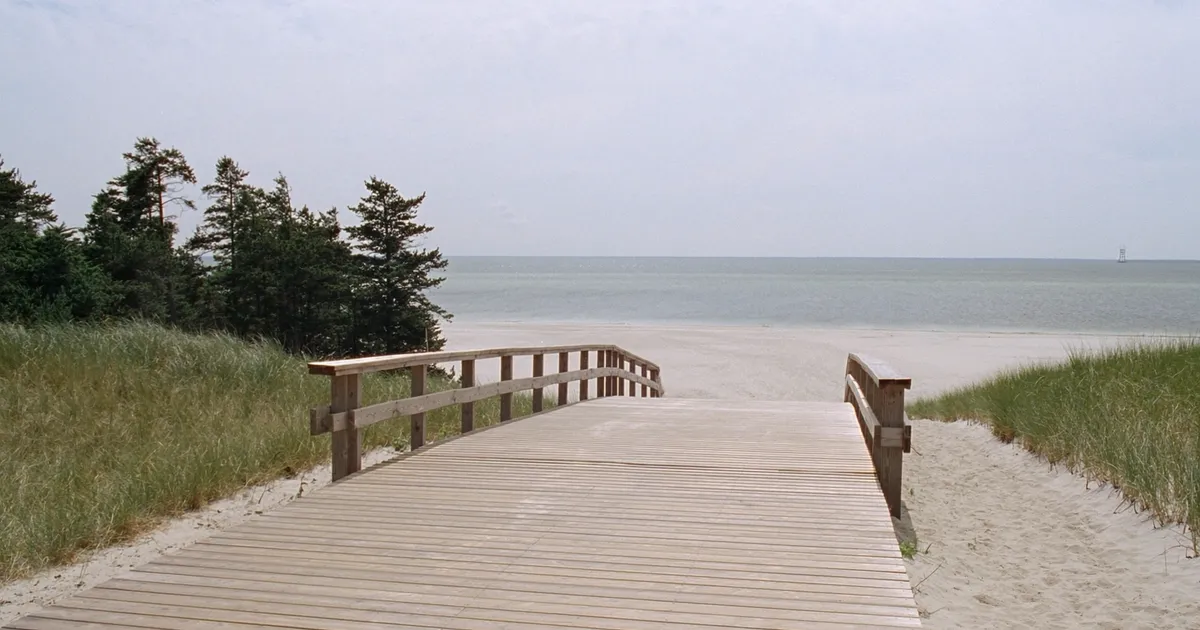
Beaches with wheelchair access — the list of entrances and amphibious beach wheelchairs
Tri-City beaches have numbered entrances, and the city explicitly flags some of them as wheelchair-accessible — with a boardwalk or a hard-surfaced path crossing the dune all the way to the waterline. According to the listing on the “Gdańsk bez barier” portal (gdansk.pl), these are entrances: 11, 16, 26, 41, 46, 48, 50, 51, 52 (on both sides), 53, 63, 65, 72, and 73. That particular page shows no date newer than 2019, and lists like this typically change from season to season — treat this list as a starting point rather than the final word, and check the current state at gdansk.pl/gdansk-bez-barier before you travel, or ask the beach staff on site.
An additional option is free amphibious beach wheelchairs — specialised equipment for going right into the water, available seasonally at Stogi beach and by the pier in Brzeźno, always under the supervision of a trained lifeguard. It’s a genuinely useful option, but it comes with one hard condition: it only operates when a WOPR lifeguard is on duty at the beach, and the 2026 lifeguard season ends at the end of August. If you’re reading this guide after that date, assume the amphibious wheelchair won’t be available — call ahead and confirm before you plan a whole day around it.
More on the beaches themselves, including getting there and parking, is in our guides → Brzeźno Beach, → Stogi Beach, and the overall → Ranking of Gdansk’s Beaches.
Museums and attractions with a lift or ramp
Gdansk’s biggest attractions have invested seriously in accessibility — but they differ in details worth knowing before your visit, not once you’re already there.
| Venue | What’s confirmed | What to watch for |
|---|---|---|
| European Solidarity Centre | 3 panoramic lifts, step-free entrance, accessible toilets on levels 0–3, 8 parking spaces, 2 wheelchairs free to borrow at the ticket desk | For a larger group, notify the accessibility department by phone in advance |
| Ośrodek Kultury Morskiej (Maritime Culture Centre), Tokarska Street | Lift to all floors with voice announcements, two step-free entrances, accessible toilets on 4 levels | — |
| Muzeum Morskie — Spichlerze (National Maritime Museum granaries), Ołowianka Street | Step-free entrance, lift to all floors, accessible toilet in the lobby | Lift doors sometimes need staff assistance |
| Museum ships Sołdek (Ołowianka) and Dar Pomorza (Gdynia) | Not wheelchair-accessible | Steep, narrow stairs, no lift — skip this stop |
This list is just a sample. Since 2022, the Gdańsk Tourist Organisation has carried out over 100 accessibility audits across the city, together with people with a range of different disabilities, and publishes the results as individual venue profiles. Before you head somewhere that isn’t in the table above, check that resource — we describe it in the last section of this guide.
Where to stay — what to actually look for in an apartment listing
A lift in the building and no steps at the entrance is one thing; a fully accessible bathroom — grab rails, a step-free shower, adequate door width — is a completely different, far more detailed claim. We can honestly confirm the first one: the buildings in our DOKI and Bastion Wałowa complexes have lifts, so luggage, a stroller, or a wheelchair don’t need to negotiate stairs anywhere from the building entrance to the apartment door.
What we don’t promise: none of our apartments is listed as having a fully wheelchair-accessible bathroom. If that detail decides your booking, message us before you reserve — we’ll check the specific unit (apartments at the same address can be assigned to different floors) and tell you plainly whether it will work, rather than leaving you with an unclear answer once you’ve arrived.
With a lift and no unnecessary stairs, we recommend:
→ Deluxe Bastion Wałowa Apartment — lift, right in the centre, a few minutes from Długi Targ and the main flat walking route. → Apartment with a garden view — the same building as above, the quieter side of Bastion Wałowa. → Two-bedroom apartment at the docks — lift, more space, a convenient ride from the centre on a low-floor tram.
Where to check accessibility yourself
No single article, including this one, is a substitute for checking in real time — accessibility can be seasonal (like the amphibious beach wheelchair) or change because of renovation work. Two places worth checking yourself:
The city portal “Gdańsk bez barier” (gdansk.pl/gdansk-bez-barier) — official information and contact details for the Miejski Ośrodek Pomocy Rodzinie (Municipal Family Support Centre), which coordinates accessibility matters in the city: tel. 58 342 31 50, mopr@gdansk.gda.pl, with a Polish Sign Language consultant also available on weekdays.
“Accessible Tourism” by the Gdańsk Tourist Organisation (got.visitgdansk.com) — a database of over 100 tourist-venue audits carried out with people with visual, hearing, and mobility disabilities, with individual venue profiles.
If, after checking these sources, you’re still unsure about a specific day of your stay — for instance, whether the entrance happens to be under renovation — the fastest option is to call the venue directly. It’s one phone call that saves you disappointment on the spot.
Planning a stay and have specific questions about a lift, getting there from parking, or the accessibility of a particular apartment? Message our concierge — we give concrete answers, not marketing generalities, and we’ll help you pick an apartment that genuinely fits your needs.
Frequently asked questions
- Is the Old Town in Gdansk accessible for wheelchair users?
- The main walking route — from Brama Wyżynna through Złota Brama, along Długa Street and Długi Targ to the Żuraw crane on the Motława — is wide, flat, and step-free, so you can get through it without major obstacles. The side streets have patches of uneven historic cobblestone here and there, so it's more comfortable to stick to the main route and the Długie Pobrzeże waterfront, which is just as wide and level.
- Are there wheelchair-accessible beaches in Gdansk?
- Yes — the city officially marks over a dozen beach access points as wheelchair-accessible, and at Stogi beach and by the pier in Brzeźno, a specialised amphibious beach wheelchair is available free of charge in season, under a lifeguard's supervision. The list of access points is updated from season to season, so check the current state at gdansk.pl/gdansk-bez-barier before you travel, and call ahead about the amphibious wheelchair — the service only runs when a lifeguard is on duty at the beach.
- Are buses and trams in Gdansk low-floor?
- Yes, and have been for a long time — the last high-floor bus was withdrawn from service in January 2009, and as of 5 March 2021, all 141 trams in the city are low-floor. Practically every ride in Gdansk is therefore wheelchair-accessible; if you want to double-check a specific stop, look up the timetable at ztm.gda.pl.
- Do Mint apartments have a lift, and are they suitable for wheelchair users?
- The buildings in our DOKI and Bastion Wałowa complexes have lifts, so luggage and a wheelchair don't need to negotiate any stairs from the building entrance all the way to the apartment. That's not the same, though, as a fully accessible bathroom — we don't explicitly state grab rails, a step-free shower, or door widths anywhere. If that detail is what decides your booking, message us before you reserve and we'll check the specific unit.
Help me book an apartment
The AI concierge matches an apartment to your plans — dates, party size, district. Replies in seconds.
Apartments that fit this stay

Apartament Deluxe Bastion Wałowa
- 1 bedroom
- 2 beds
- 4 guests
- 45 m²
A stylish apartment with a balcony right in the heart of Gdańsk on Wałowa Street — 45 m², 5 minutes' walk to the Old Town and Long Market. The balcony view says it all: Old Town on your right, the Gdańsk Shipyard on your left — the two must-sees of any visit in a single frame. Fully equipped kitchen, shower bathroom, Smart TV, fast Wi-Fi, washing machine and oven. Underground parking space included. Sleeps 2–4.
Apartament z widokiem na ogród
- 1 bedroom
- 2 beds
- 4 guests
- 46 m²
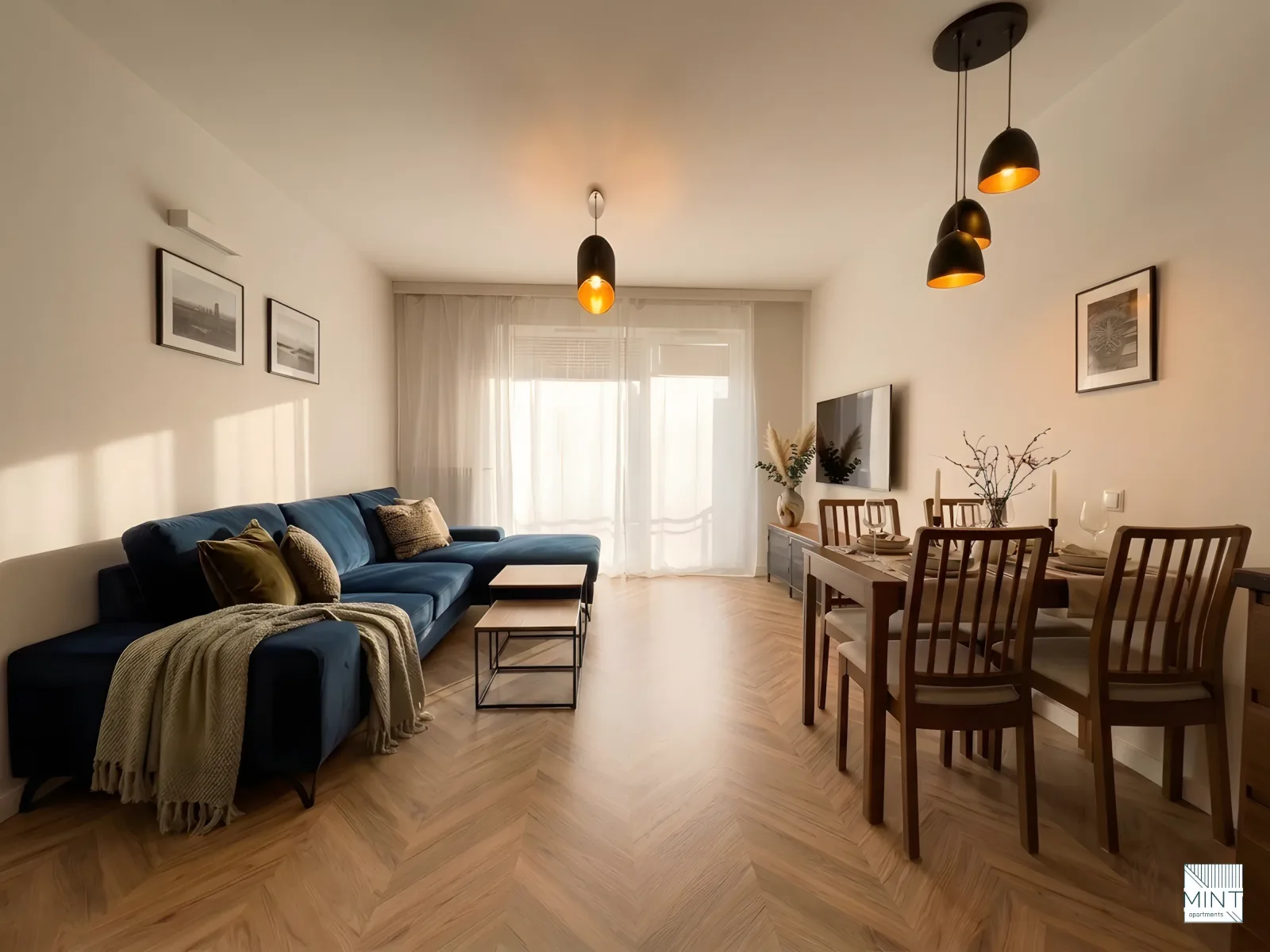
A cosy apartment with garden views on the 3rd or 4th floor of the Bastion Wałowa complex on Wałowa Street — 46 m², bedroom with a king-size bed, balcony, fully equipped kitchen, fast Wi-Fi and Smart TV. 5 minutes' walk to the Old Town, 7 minutes to Długi Targ. Internal quiet — garden view instead of street noise. One of Mint's most peaceful addresses in Gdańsk's historic centre. Underground garage and lift in the building.
Apartament na dokach z dwiema sypialniami
- 2 bedrooms
- 3 beds
- 6 guests
- 68 m²
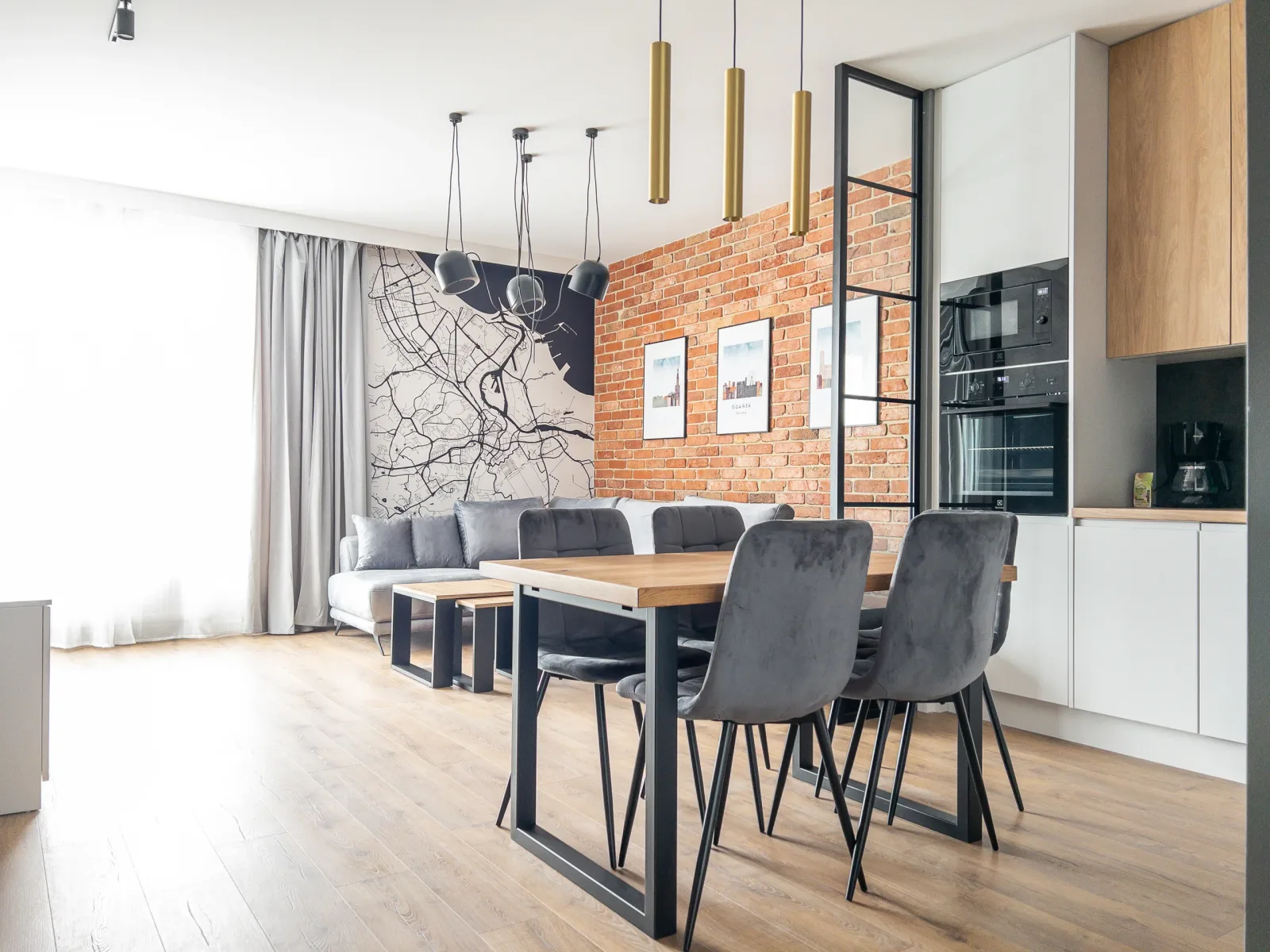
A loft-style two-bedroom apartment at DOKI — 68 m², two bathrooms, dedicated workspace, underground garage. Master bedroom with king-size bed, second bedroom with two beds (convertible to double on request). For 2–6 guests. ECS 10 minutes on foot, Montownia within walking distance, tram to the Old Town 15 minutes. Workspace by the window, Shipyard outside — remote work has the right address here.
Liked these topics?
Monthly guide to Gdańsk — events, new places, our apartments and their availability. No spam, just one email.
Related posts
Dolne Miasto in Gdansk — What to See Away from the Old Town Crowds
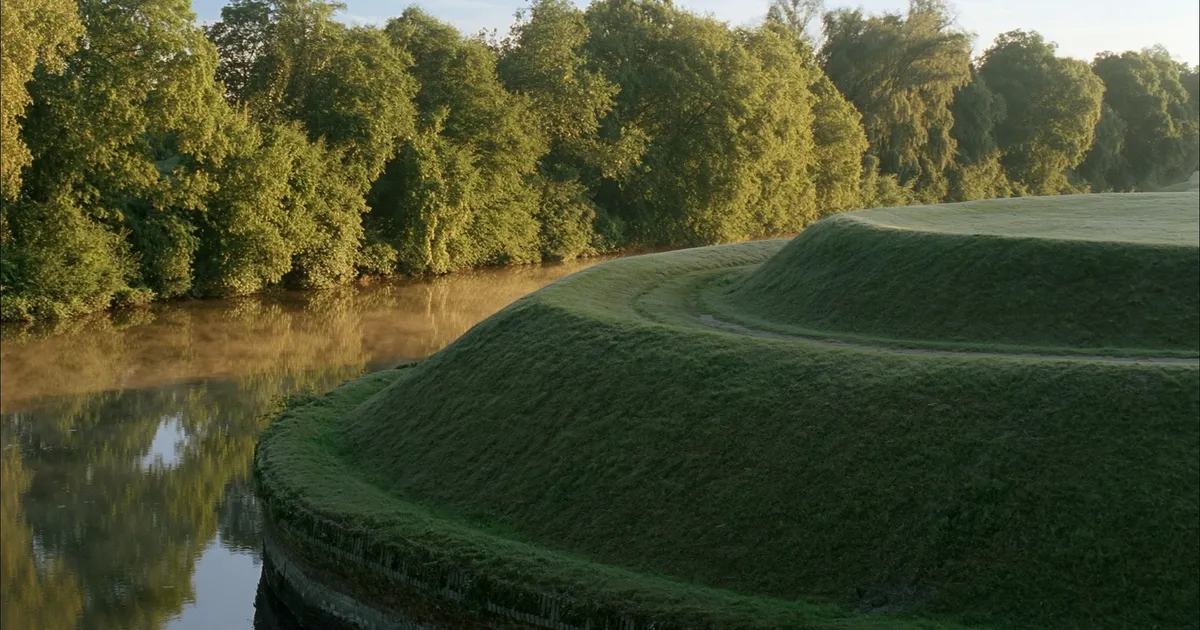
The bastions, Śluza Kamienna and the Opływ Motławy canal — minutes from Długi Targ, barely in guidebooks. What to see and where to start the walk.

Money in Gdansk: Currency Exchange, Cards, BLIK, and Tipping Without the Mistakes
What you pay with in Gdansk, where to exchange money safely, how BLIK works and how much to tip — a practical guide to paying your way around the city.
The Free City of Danzig, 1920–1939 — What Traces You Can Still See Today
The Free City of Danzig disappeared from the map in 1939, but its traces still stand in the city. Here's exactly what you'll see, and how to turn it into a route.